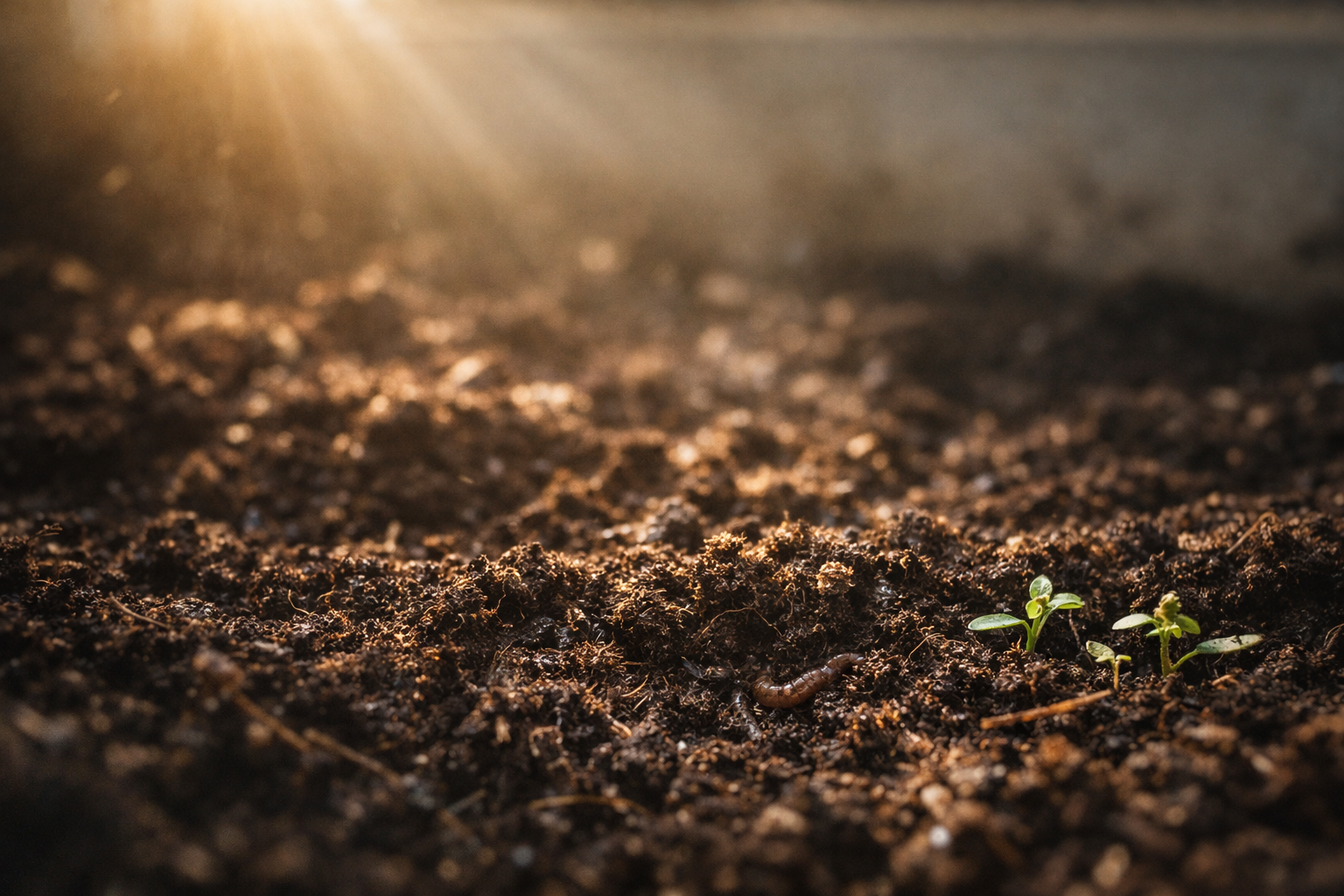
Someone decides to begin.
That moment usually looks smaller than people expect. Just a person standing somewhere in their life deciding that today is a good day to start something.
Maybe it is the first seed pushed into the soil.
Maybe it is the first time someone walks outside and really looks at the land around them and thinks, I could grow something here.
Maybe it is deciding to cook a real meal instead of opening another package.
Maybe it is learning to fix something instead of throwing it away.
Maybe it is the decision to read, to build, to practice, or to slow down long enough to pay attention.
Whatever the thing is, it begins with a choice.
A lot of people believe that meaningful change requires a perfect plan before anything can begin. They imagine rows already mapped out, every tool ready, every step organized ahead of time. But real life rarely works that way. Most gardens begin with uncertainty. Most skills begin with awkward attempts. Most good habits begin with someone simply trying something and seeing where it leads.
If you spend enough time around gardens, you begin to notice how forgiving the process really is.
A person can plant things too close together and still harvest something. They can forget to water one week and still see life return after the rain. They can make mistakes with spacing, timing, and varieties, and the garden still finds a way to grow.
Gardening teaches patience because nothing in it happens quickly. Plants simply keep doing the work of growing day by day.
The same rhythm shows up in almost every worthwhile skill.
Think about someone learning to bake bread. The first loaf might come out dense or uneven. The dough might feel strange in their hands. They might wonder if they did something wrong. But the next loaf is a little better. The hands learn something the first time that the mind could not understand from reading instructions alone.
Or think about someone learning to cook real food after years of eating whatever was easiest. At first the kitchen feels unfamiliar. It takes longer to chop vegetables, to prepare ingredients, to clean up afterward. But after enough meals the movements become natural. A rhythm develops. What once felt complicated becomes part of the day.
The same thing happens with working the land.
The first time someone builds a garden bed it takes hours. The soil feels heavy. The spacing feels uncertain. A person might question whether the work will even be worth it. But seasons have a way of answering those questions.
After a while the soil begins to change. Earthworms appear. Plants grow stronger. A person who once felt unsure now walks through the garden and recognizes what the plants are telling them.
It is a relationship built slowly.
This is something the modern world often struggles to understand. Many things around us promise speed. Faster results. Instant solutions. Quick improvements. But the things that truly shape a life rarely work on that kind of timeline.
A garden cannot be rushed.
You can prepare the soil, choose good seeds, water when needed, and give plants sunlight. But the growing itself happens on its own schedule. The same is true for habits and skills. They deepen through repetition and time.
One small action repeated often enough begins to form a pattern.
Watering a garden each morning eventually becomes part of how someone starts the day. Cooking at home becomes a normal part of life instead of an occasional effort. Learning a craft becomes something a person returns to without needing to convince themselves each time.
People sometimes wait for the right moment to begin these things. They imagine that someday they will have more time, more space, more knowledge, or better conditions.
But gardens do not usually begin under perfect conditions.
They begin in backyards that need work. In small patches of soil beside fences. In containers on porches and balconies. They begin with whatever tools someone has at the time.
The same principle applies to almost anything worth learning.
A person does not need to know everything before starting. They simply need to begin. Experience has a way of teaching what books and videos cannot fully explain.
Mistakes become part of the learning. Adjustments are made along the way.
Over time something interesting happens.
The small actions that once required effort begin to feel natural. A person who once hesitated to plant their first seeds might now be planning the next season before the current one has even ended. Someone who once struggled to cook a simple meal might now prepare food without thinking much about the steps.
The beginning that once felt uncertain becomes part of a much larger story.
If you walk through a mature garden in the middle of summer, it is easy to forget how simple its beginning was. Rows of vegetables, flowers attracting bees, herbs spilling over the edges of beds. The space feels alive and abundant.
But none of that appeared all at once.
It came from seeds placed in the soil weeks or months earlier. From watering cans carried back and forth. From hands pulling weeds and tending plants. From someone returning again and again to care for what they started.
That is the quiet truth behind most meaningful things.
They grow from small beginnings.
A single decision to start something. A handful of actions repeated day after day. Patience when progress feels slow. Trust in the process even when results are not immediately visible.
In the end, gardens teach something that applies far beyond the soil.
You do not need to begin with something big.
You only need to begin.

Leave a Reply